
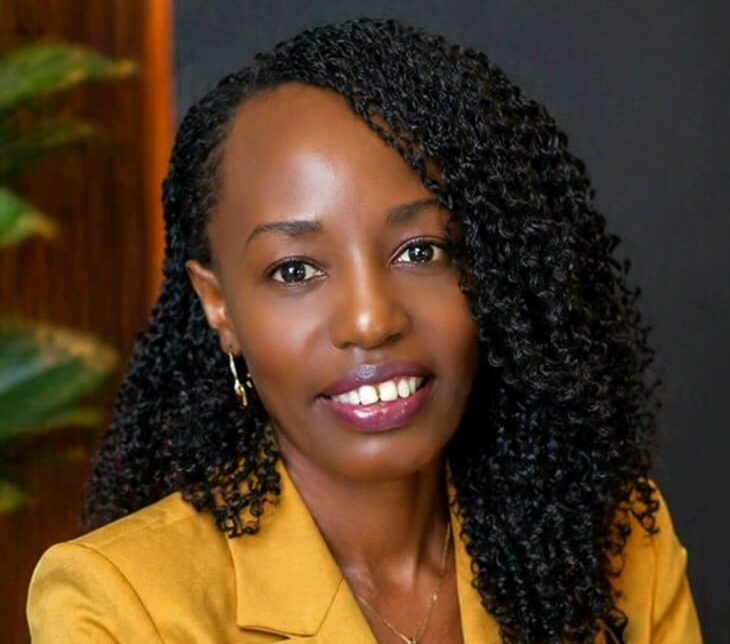
This week on the Comms Spotlight, we feature Emmanuella Ngororano, Founder and CEO of EmergeImpact Communications, a pan-African communications agency that helps development-focused organisations tell their stories and engage the right stakeholders. Emmanuella shares how growing up in Burundi led her to see strategic communications as a form of advocacy, and ultimately, a pathway to impact.
What inspired you to pursue a career in Communications?
I did not choose communications. I think, in many ways, it chose me, and I am glad it did!
Growing up in Burundi, I was surrounded by a country with a profound story: a story of resilience, of communities rebuilding, of people working hard towards a better future. But I kept noticing a painful disconnect. The richness of what was happening on the ground rarely made it into the rooms where decisions were being made. Resources were allocated, policies were shaped, and programmes were designed, often without the voices of the very communities they were meant to serve.
That tension stayed with me, leading me to begin my academic journey in Communications for Development at Université Lumière de Bujumbura, where everything clicked. I realised that communications was not just a profession. It was a form of advocacy. And more than that, it was a pathway to impact. Not a straight line, but a sequence: you first have to genuinely engage with your stakeholders and understand them deeply. From that authentic engagement, new possibilities emerge, partnerships form, dormant relationships activate, and solutions become visible. And it is only then that real, measurable impact becomes possible.
Engage. Emerge. Impact became, years later, the founding philosophy of EmergeImpact Communications. It was not something I invented at a whiteboard; it was something I lived before I had language for it. My early experiences at organisations like ACORD Burundi, Village Imuhira (SEL Projects), African Christian Health Association Platform (ACHAP) and later Africa Minigrid Developers Association (AMDA) confirmed it over and over. The organisations making the biggest difference were not the ones with the biggest budgets. They were the ones who knew how to communicate with purpose and who understood that every communication effort should be designed to catalyse measurable change, not just engagement metrics.
That is the work I was made for, and I have never looked back.
What does a typical day look like for you as a founder and communications professional?
Honestly? No two days look the same, and I have made peace with the fact that this is not a flaw in my routine. It is the nature of the work I have chosen, and I do it with conviction and joy!
Some mornings arrive quietly, with thoughts finding their shape in the stillness before the world has a chance to pull me in. Other mornings come in fast, with a voice note from a client, a collaborator, a mentee or mentor in a different time zone, or an idea that would not wait for me to be fully awake. Some days begin with prayer and intention. Others begin mid-thought, as if my mind kept working while I slept.
What stays constant is not the structure; it is the intention. However the morning begins, I find myself returning to the same question before I dive in: what is the most important thing I can move forward today? That question is my compass. It keeps me from confusing busyness with progress, and activity with impact, a distinction that, as a founder, I have to remind myself of more often than I would like to admit.
From there, the day opens into client engagements, whether that is shaping a stakeholder engagement strategy for an organisation in the renewable energy sector, reviewing content that translates complex development data into compelling narratives, drafting a grant proposal, or facilitating conversations between decision-makers. As a multilingual professional working across Anglophone and Francophone Africa, I also spend a good deal of time bridging language and cultural contexts, because a message that lands in Nairobi does not automatically land in Dakar, and that nuance matters enormously.
In between, I wear the full founder hat: business development, operations, expert coordination, programme design and execution. And I end most days with a simple question: “what moved forward today, and who benefits?” That question keeps me grounded in the E2I (Engage. Emerge. Impact) philosophy that sits at the heart of EmergeImpact: every action should be moving us from genuine engagement, towards emergence, towards impact. When the answer is yes, I sleep well.
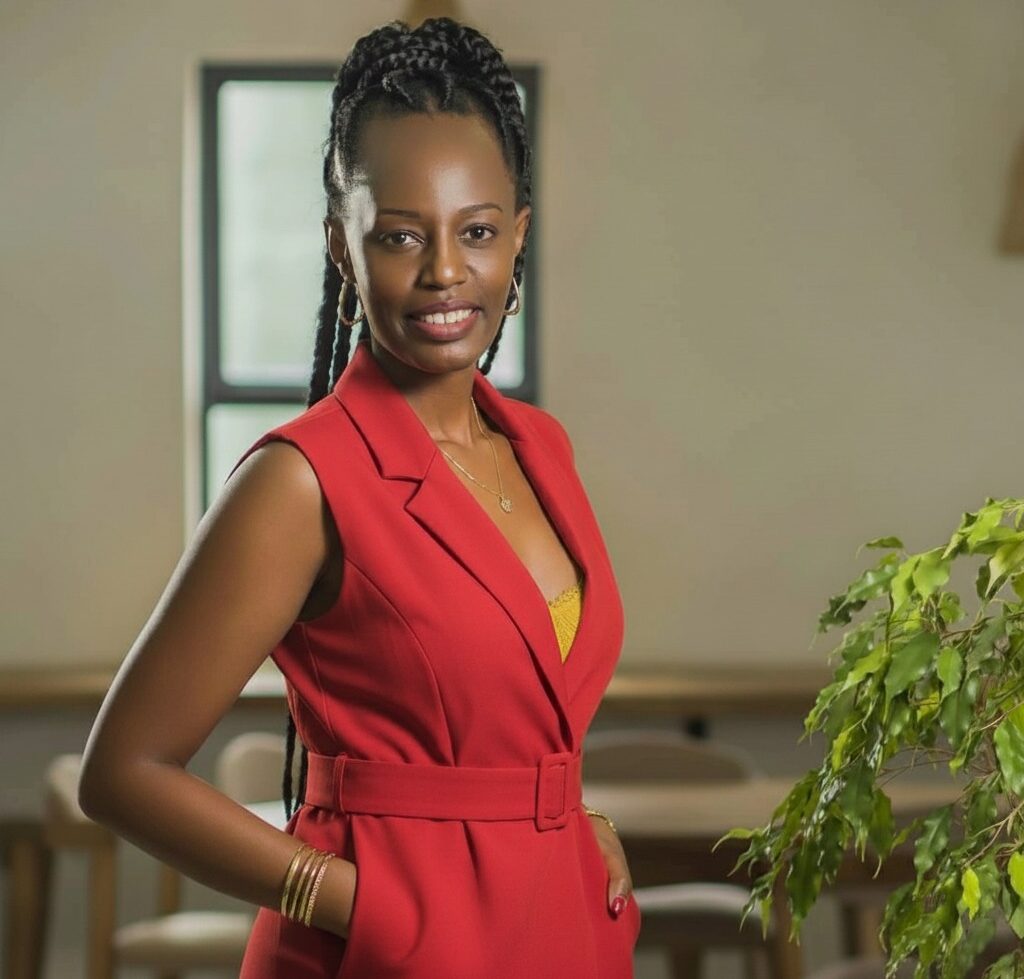
What impact do you hope your work will have on communities across Africa in the long term?
My deepest hope is that EmergeImpact Communications contributes to an Africa where mission-driven organisations never have to struggle to be heard or seen, where the quality of an idea or initiative is matched by the power of how it is communicated.
So often, extraordinary interventions in health, energy, education and innovation fall short of their potential not because the work is not good, but because the communications are not strategic enough to mobilise the stakeholders, funders, and communities they need. I want to close that gap, systematically, across the continent, in both Anglophone and Francophone markets.
Our E2I philosophy, Engage. Emerge. Impact, is built on the belief that when organisations deeply understand their stakeholders, they unlock something powerful. Dormant relationships activate. Unexpected collaborations form. Their potential becomes visible to the people who can help them scale. And from that emergence, real, lasting social change becomes possible. That is not just our methodology; it is our vision for how Africa’s development ecosystem should function.
In the long term, I hope EmergeImpact will have played a meaningful role in strengthening the communications capacity of organisations across the continent, so their missions not only land, but resonate and endure. And I hope to have helped inspire a generation of African communicators who see their craft as intrinsically linked to sustainable development, not just to brand building.
What I also hope for most deeply is this: to witness impact being co-created. Not delivered from the top down, not designed in a boardroom far from the communities it is meant to serve, but built together, in genuine partnership, where organisations and the communities they serve are both authors of the systems change. There is something extraordinary that happens in those moments of true co-creation, when a community does not just receive impact, but shapes it, owns it, and carries it forward long after the project ends. They are likely to protect it and transfer it to the next generation. That, to me, is impact at its most beautiful and its most lasting. It is a legacy, and that is the future I am building towards.
What has been one of your most meaningful projects so far?
One of the most meaningful chapters of my career was my work with the Africa Minigrid Developers Association (AMDA), where I had the privilege of amplifying the stories of minigrid developers who are electrifying rural Africa and the communities gaining access to electricity for the very first time through minigrid systems.
Energy access is one of the most transformative forces in development. It changes everything, from how children study once night falls, to how women-led businesses operate and grow. But those stories were not reaching the people who needed to hear them: the policymakers, the funders, the global energy access community. My role was to close that gap, to take what was happening in villages across Africa and translate it into narratives compelling enough to shift conversations at the highest levels.
What made it deeply meaningful was the responsibility of it. These were not abstract development statistics; they were real people, real lights switching on for the first time, real lives changing. Getting the communications right felt urgent in a way that went beyond any brief. I worked to ensure that AMDA’s communications did not just inform stakeholders, but moved them to action, and seeing real advocacy outcomes flow from that work reinforced everything I believe about the power of strategic communications in the development space.
It was also what inspired me to found EmergeImpact Communications, and where I understood most viscerally what Engage, Emerge, Impact really means in practice. When you communicate a community’s story with authenticity, intention and clarity, something shifts: funders engage differently, partners emerge from unexpected places, and the impact that follows is no longer just the organisation’s; it belongs to everyone who was moved enough to act. Stakeholders become advocates. My experience at AMDA lives with me as a reminder of why this work matters.
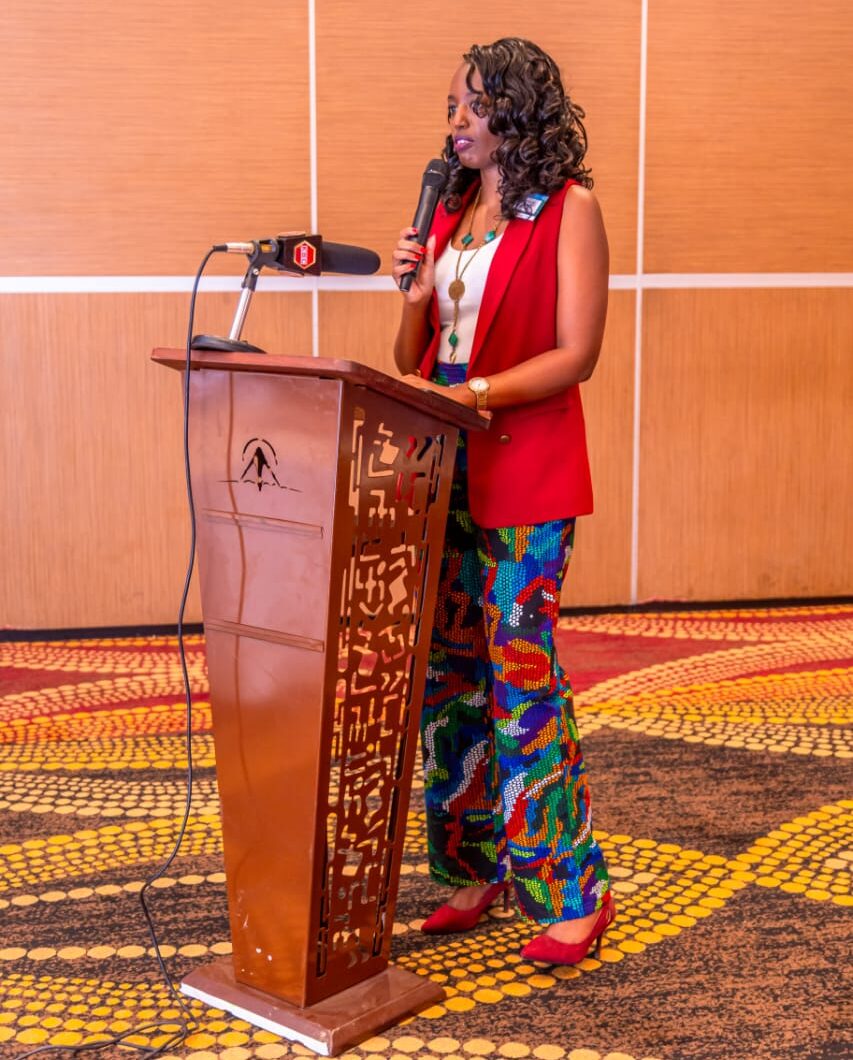
What has been your biggest ‘lesson learned’ since founding EmergeImpact Communications?
The biggest lesson has been learning to trust the process, and to give myself grace as a founder. When you are deeply passionate about impact, there is a temptation to move at the speed of urgency rather than the speed of strategy. I have learned that sustainable impact requires sustainable foundations: building the right systems, nurturing the right relationships, and being willing to say no to opportunities that do not align with your mission.
I have also learned that authenticity is not just a value; it is a competitive advantage. In a crowded communications landscape, what sets EmergeImpact apart is our genuine rootedness in Africa’s development story. Our E2I philosophy is human-centred, audience-centric, and data-powered by design, because we genuinely believe that cookie-cutter communications frameworks do not serve Africa’s development ecosystem. I have learned to lead with that conviction unapologetically, rather than trying to mirror models designed for other markets or contexts.
What advice would you give to young professionals who want to pivot their careers towards the non-profit or social impact sector?
First: your skills are far more transferable than you think. Whether you come from communications, journalism, marketing, public relations, or digital media, the social impact sector needs all of it. What you need to layer on is context. Understand the development landscape. Learn the language of the SDGs. Immerse yourself in the specific challenges and opportunities of the communities you want to serve. The technical skills get you in the door; mastering the context makes you indispensable.
Second: invest deeply in the community. Networks like the Young African Leaders Initiative (YALI) were genuinely transformative for me, not just for the learning, but for finding peers who shared a pan-African vision and were willing to hold each other accountable to it. Surround yourself with people who are doing the work, find a mentor, show up generously, and give as much as you take.
Third, and this is the one I wish someone had told me earlier: be patient with impact, but intentional every single day. This sector will stretch you, challenge you, and occasionally break your heart. But when you see a community gain access to electricity for the first time, or watch an organisation reach thousands more people because of a strategy you helped build or an engagement you facilitated, that is a kind of fulfilment that is simply unmatched.
Stay rooted in your why. Engage with purpose. And keep going and growing, because Africa needs you.