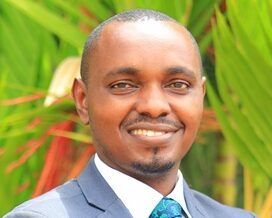

Meet Michael Adenmosun, Communications Officer at DigiCivic Initiative. In this edition of the Comms Spotlight, he shares how his work in digital rights and civic participation has shaped his approach to storytelling, strategy, and building public trust. He also discusses why communications professionals need to think beyond content creation and develop the ability to understand audiences, build systems, and communicate with purpose.
What inspired you to pursue a career in Communications?
Early in my career, while working in government communications, I remember watching how a single well-told story could shift an entire room. A policy conversation that had been stuck for weeks moved because someone finally heard the issue explained in human terms instead of technical ones.
That was the moment it clicked for me: Communications isn’t decoration on top of the real work, it is the work. It can be the difference between a good policy sitting unused and a good policy actually reaching the people it was designed to help.
I’ve been interested in that gap between something being true and it being genuinely understood ever since.
What does your role as Communications Officer at DigiCivic Initiative involve daily?
My day-to-day work is a mix of structured strategy and reactive, in-the-moment work.
On the structured side, I develop things like editorial frameworks and content strategy. DigiCivic operates around a content hierarchy that I helped develop, so every piece of content has a clear reason for existing rather than simply filling a schedule.
On the reactive side, a lot of my work happens live. I cover events such as the Digital Rights Judges Workshop, the Litigation Surgery, and capacity building sessions/seminars on issues such as online gender-based violence. This often means writing captions and posts in real time while an event is still happening.
Beyond DigiCivic, my communications work spans different formats and clients. I’ve developed media strategies and content roadmaps for public figures, produced documentaries, written proposals for donor-funded programmes, and advised on digital brand strategy for a political campaign.
So, on any given week, I might go from drafting a formal strategy document in the morning to being behind a camera at an event in the afternoon.
The thought process is always the same: take something complex and make it land with the right audience.

What’s one misconception people have about civic participation that your work is constantly trying to change?
People often think civic participation is mainly about protests, petitions or running for office.
But much of the work I do at DigiCivic is about showing people that civic participation also happens in quieter ways. It can be about whether your data is protected, whether something you post online could get you arrested, or whether you even know that certain rights exist in the first place.
A lot of the work we cover, workshops, capacity building sessions to protections against online gender-based violence, is civic participation happening in courtrooms and policy rooms that most people never see.
Part of my job is translating that less visible work into something people can actually understand and relate to.
When I’m covering a workshop live or writing about a court ruling, I’m not just reporting an event. I’m trying to close the gap between “this technically affects you” and “this actually feels like it affects you.”
Can you share a project that made a meaningful impact on the communities you serve?
Before I moved into digital rights and civic technology, I spent several years working in public health communications. The project I’m proudest of actually comes from that chapter.
FORM(om) is a maternal health documentary I produced from start to finish, from field production to the final cut, across Lagos, Kano and Delta states. Three states, three very different realities, but the same underlying crisis around maternal mortality.
It is a bit of a departure from the civic and digital rights work I do now, but it is also the project that shaped how I approach every story since.
You don’t get to just show up with a camera and expect people to open up about the hardest moments of their lives. You have to earn that trust first.
That lesson has followed me into every sector I’ve worked in since, including digital rights.

Digital spaces have made information more accessible, but they’ve also made misinformation easier to spread. How do you think communications professionals can help build public trust in this environment?
I think the instinct is often to fight misinformation with more information: more posts, more corrections and more noise.
But volume isn’t what builds trust. Consistency is. If an organisation says one thing today and something slightly different tomorrow, that gap is where distrust grows, even if both statements are technically true.
A lot of my work, from building editorial frameworks to establishing a clear content hierarchy before anything is published, is really about protecting that consistency.
It’s not glamorous work. Nobody notices an editorial framework. But it is what helps people know what to expect from an organisation and allows them to measure what is being said against what was said before.
Trust isn’t built in one viral post. It’s built in the repeated discipline of saying true things clearly and consistently over time.
What advice would you give to professionals seeking to transition into a career in communications?
At a certain point, being a good writer or designer isn’t enough. You need to start thinking like a strategist.
The professionals who grow into communications leadership are the ones who can step back from the day-to-day content work and ask bigger questions:
What is the actual goal here? What does this organisation need to be known for six months from now, not just today? How do we build a system so that good messaging doesn’t depend on one person’s memory or gut feeling?
My advice is to start building those muscles early, even in a junior role.
Don’t just execute the calendar you’re given. Ask why it is structured that way. Learn to build frameworks, not just individual pieces of content.
And get comfortable moving across formats and sectors. The best communications managers I know aren’t necessarily specialists in one platform. They are specialists in figuring out what a specific audience, in a specific moment, actually needs to hear.