
This monthly series gives you a behind-the-scenes look at A Day in the Life of a Comms Professional.
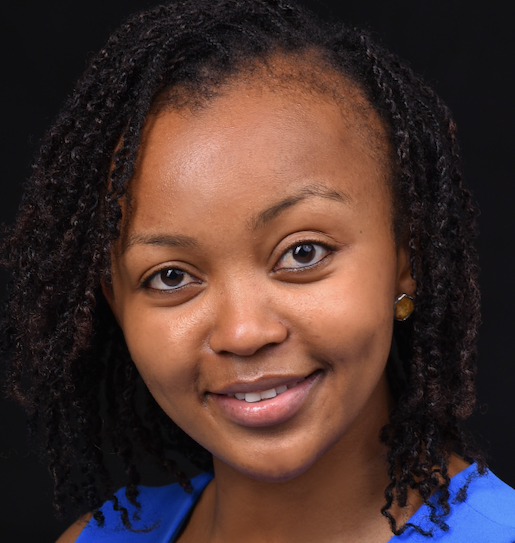
Meet Amedia Anyang, Program Lead for Stakeholder Engagement and Strategic Communications at Central Bayside Community Health Services (CBCHS). She takes us through her day navigating health advocacy, community sensitisation, and strategic communications across Cameroon, offering a grounded look at what it takes to drive impact, manage expectations, and keep communication aligned in sensitive yet complex settings.
What Does a Typical Workday Look Like for You?
When I get into the office, I usually chat with colleagues about national and international news. Cameroon is currently experiencing conflict, which affects our work, so we discuss how this impacts our day. I then review my calendar and plan the content to share. On days when I go to the radio for interactive programmes or to communities for sensitisation and project follow-ups, I head out. It depends on the week’s objectives.
Our advocacy operates on two levels: community and leadership. We conduct community sensitisation and engage leaders at regional and national levels. Our campaigns vary depending on the issue, whether non-communicable diseases, HIV, or childhood cancer. For instance, we may run a campaign in the North-West region of Cameroon to highlight paediatric HIV and the impact of changing international funding. We use various communication channels, gather feedback, and share reports with leaders and the government. Our work focuses on changing mindsets and influencing policies.
I am a communications specialist with the Cameroon Baptist Convention Health Services. We are a faith-based organisation and the second-largest healthcare provider in Cameroon after the government. We provide health services across the country, with about ten hospitals, multiple health centres, and hundreds of primary healthcare facilities. We run projects covering various diseases, and I specialise in HIV.
We have a few other communications professionals, although we cannot cover the entire scope of health. At CBC, we handle all communication related to health, with me focusing on HIV. My responsibilities include ensuring that corporate, internal, and external communications, as well as social media and media relations, are aligned. I also monitor and evaluate communications within HIV projects, particularly in hard-to-reach regions.
Some colleagues underestimate communications. They sometimes describe it as a minor function, but the work we do has a significant impact, and our results speak for themselves.
There are often differing expectations. For example, a campaign or poster may be expected to go viral or reach a million views. We use analytics and reports to explain the effort behind such outcomes. Challenges also arise when project managers set targets, such as reaching a specific number of course registrations, but involve communications too late. We emphasise the importance of engaging communications from the very beginning, even at the idea stage.
Measurement remains a challenge in the NGO sector because goals are less fixed than in the private sector. We are working towards defining measurable KPIs to assess our impact accurately. For example, while a radio programme may have 10,000 listeners, we still need to verify actual engagement. We are exploring ways to implement measurable KPIs effectively.
It is encouraging to see a growing focus on measurement, as it is essential for communications professionals.
What tools, apps, and resources do you use most often in your job, and why?
I use a lot of AI. I genuinely believe it makes work easier, but there is a caveat. We are very careful about how we use it because some documents and information should not be shared or made public.
For example, if I am running a campaign or survey on HIV and persons living with disabilities in a particular zone, and there is sensitive technical information, we do not use AI. The more information you provide, the more it learns, so we limit what we share. AI provides a starting point, which I then adapt to suit the context and objective. It shortens the time required but does not replace my voice or perspective.
I also use Canva, Filmora, Adobe Creative Suite, Hootsuite, Google Calendar, and WhatsApp. WhatsApp is essential for communicating with people in different zones, including caregiver mentors. For social media, we use Facebook, X, YouTube, and Instagram. I often outsource design work to graphic designers so I can focus on strategy and execution.
The internet is a key resource. I regularly take online courses from organisations such as the UN, Harvard, and Johns Hopkins, particularly in health communications. I follow trends on X, TikTok, and LinkedIn to stay updated on industry developments, AI, and emerging topics in HIV treatment. Staying ahead of trends is essential.

Do you have any specific routines or habits that help you prepare for work?
Personally, I listen to Christian music a lot, which is part of my daily routine. As a mother, a minister of the gospel, and a professional, the first thing I do in the morning is tune in to my favourite gospel collection. It helps me start the day focused. I also spend a few moments in meditation, reflecting on what I want to achieve during the day.
When I get to the office, I usually chat with my colleagues. We are friends, so we spend about 30 minutes sharing ideas and discussing current happenings.
On my desk, I use a framework divided into four sections: urgent and important, urgent and not important, not urgent and important, and not urgent and not important. Every task is placed into one of these categories. I start with urgent and important tasks and plan the rest of my day around the others. That framework guides my day.
If you weren’t in Communications, what career path would you explore?
Environmental issues. I am extremely passionate about them and am beginning to focus more on this area. Do not be surprised if you see my LinkedIn bio updated to “Health and Environmental Communicator”. I follow waste management closely, partly because of the poor state of waste management in our country and the broader environmental challenges. I see how it affects lives and how closely it is linked to health.
Practically, if I were not in communications, I would have pursued a role as an environmental programmes manager, driving change in this space.

What’s your favourite way to relax after work?
I read a lot, mainly novels. Anything that captures my interest, I will dive into, even a 500-page book in three days if I am invested. It is a passion I have had for a long time.
When I get home and the children are settled, I pick up a book and read. Sometimes I even find 30 minutes during my office break to read. If a book truly captivates me, I might stay up until 3 am just to finish it. My husband understands and supports this, giving me time to unwind while I read.
Can you tell us a fun fact about you?
A fun fact? I always tell the peer supporters I work with, young people living with HIV who help others overcome stigma, to have fun. Life is not always fair and does not follow a set path, so it is important to make the most of each moment. Have fun, as long as it is within the law and does not harm anyone. Enjoy yourself.