
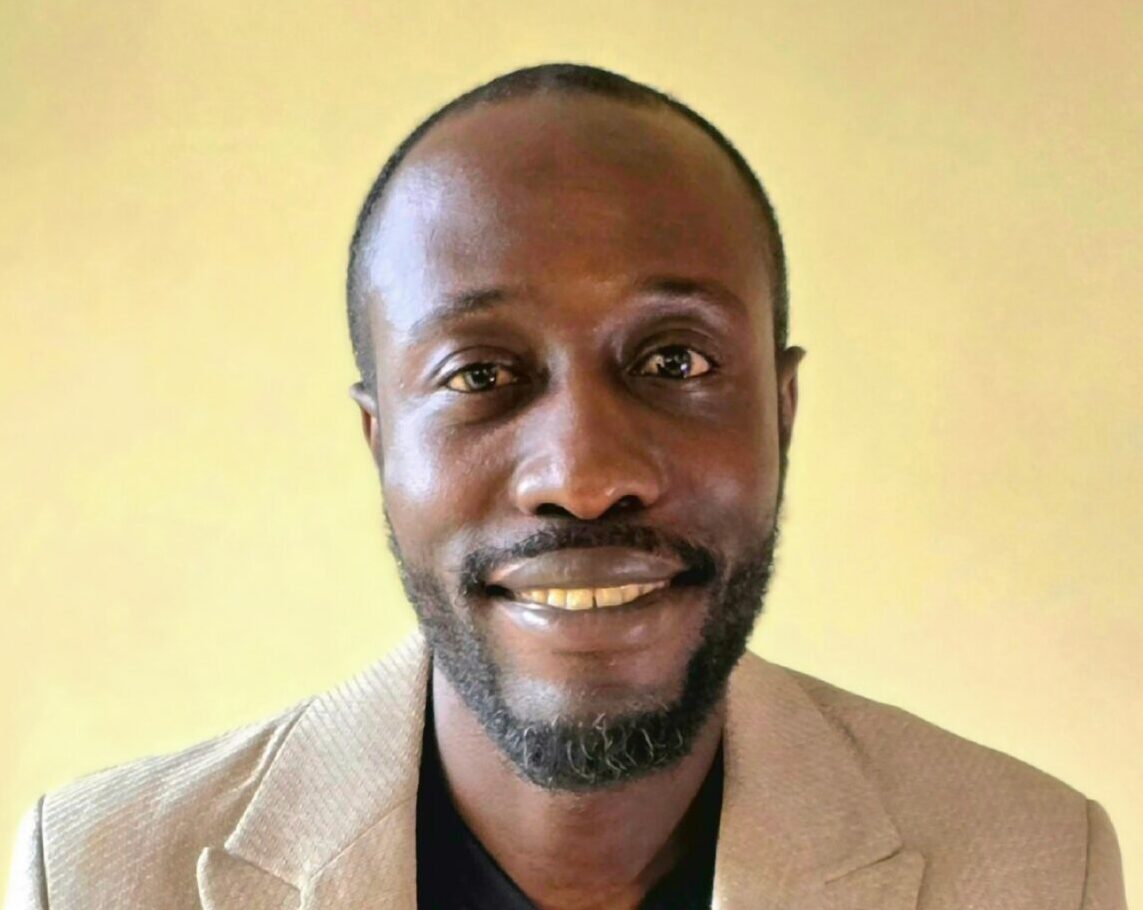
Chris Fleming is a strategic communications consultant based in Mbabane, Eswatini, and a Chartered Public Relations Practitioner with the Public Relations Institute of Southern Africa.
What inspired your journey into communications and consulting?
I trained as an IT hardware engineer but quickly realised the difference between a hobby and a career. After a year of selling products, handling customer support, and doing repairs, I knew it was time for a change.
The part of the job I enjoyed was the direct engagement with customers, whether that was sorting out a problem or running a product demo. It was around this time that I also started to enjoy creative writing and reading. I had an opinion on a lot of things!
Fortunately, I was able to secure my first roles in communications and marketing, starting in entertainment and then moving to the Family Life Association of Eswatini (FLAS). FLAS is where it all clicked, and I knew I did not want to focus on communications in general but on development communications specifically. I found myself working on sexual and reproductive health in a country where those conversations are not easy to have in public, and it was a challenge I relished. The journey continued when I applied a continental lens at the African Union Commission, and broadened my skill set through programme management at a local NGO, Kwakha Indvodza.
Consulting came about eight years in. I wanted to know whether what I had built would stand up in the open market without an organisation’s name in front of mine. It was nerve-racking and it felt like a make or break moment, but I had support from my wife, who is also a communications consultant, and from industry peers.
So far, it has been the most fulfilling stretch of my career, and it has put me in rooms with UN agencies, civil society networks and private sector clients in Africa and beyond.
What does a typical day look like for you as an independent consultant?
Most of my work is remote, from home in Eswatini, and no two weeks look quite the same. So I run the day in three zones instead of one continuous block. Zone one is 8am to midday. Zone two is 2pm to 5pm. Zone three is 7pm to 11pm.
Zone one is for anything that needs a clear head: strategy, writing, whatever I will have to defend later. Zone two is coordination, review and the administration that keeps a consultancy running. Zone three picks up whatever came in during the day and cannot wait until morning.
Calls go wherever the client’s diary puts them, and when the scheduling is mine to do I usually take the end of zone two or somewhere in zone three, keeping zone one clear.
The gaps between the zones matter just as much. Midday to two and five to seven are when I unwind, catch up with family and friends, scroll through social media, or load up a game of chess. Early in my consulting career I let work fill those gaps too, and the work itself got worse for it.
The structure does not survive every week. Launch weeks and reporting deadlines flatten it, but having a shape to come back to means a hectic period does not become the new norm.

Managing multi-country accounts across East and Southern Africa requires adaptability. How do you tailor strategies for vastly different local business environments?
Most of my multi-country work has been programmes and networks: a nine-country campaign coordinated through TDR Consulting, continental work with the African Union Commission, and more recently global social media management for UNICEF’s HIV/AIDS Section.
Unlike commercial agency work, the variable I am adapting to is not consumer taste. It is what a partner organisation in a given country can safely and credibly say. A message that is unremarkable in one capital can put a partner in a genuinely difficult position in another, depending on the law, how the subject is talked about publicly, the government’s posture, and how much standing the organisation saying it has at home. Same campaign, same evidence, completely different risk.
What I hold constant is the objective and the evidence base, while exercising flexibility on the messenger, the framing, and occasionally whether a particular message runs in that country at all.
The principle and method: do not design centrally and translate outwards. Before anything is signed off, ask the in-country partner a plain question: if this runs here, what does it get you and what does it cost you? Then build the framework with enough room in it that their answer can change something real and not just the wording on a poster.
The failure I have watched more than once is a well-made campaign, produced centrally, that nobody in-country will put their name to. In many cases the quality of the work was not the problem. Nobody asked early enough, and by the time they did the budget was committed and the only remaining option was to push it out and hope.
Tell us about a challenge you have faced on your professional journey and how you overcame it.
The challenge that keeps recurring is not a single crisis. It is the ethical pressure that comes with knowing how to make things land.
There is a line here that gets blurred, so let me say where I put it. Shaping a narrative is the job. What you lead with, which audience hears what and when, how you frame a difficult fact in its full context, all of that is legitimate craft. Lying is not, and neither is engineering delay so that people find out too late to act. The second rarely announces itself, though. It arrives dressed as the first and phrased as a reasonable request. Soften this. Lead with that number instead of the other one. Do we have to mention the delay?
The clearest version I have faced was a client wanting to handle a crisis through media engagement designed to stall until the news cycle moved on. Nothing false would have been said. Nothing true would have been said either. I pushed back and made the argument on their own terms: if this surfaces later, and in my assessment it would, the damage is roughly double what it would be if we took accountability now and committed publicly to fixing it.
They took the advice, which was a relief, because if they had not I was prepared to find a way to end the engagement. What makes it possible to say no is having decided in advance that you will. If you wait until you are in the room to work out where your line is, you will find a reason to move it.
What further helps is having something outside myself to point at. I am a Chartered Public Relations Practitioner with PRISA, which carries a code of professional conduct I am accountable to. It moves the conversation off my personal preference, which a client is entitled to argue with, and onto a professional standard, which is harder to wave away.
Our reputation is the hardest currency any of us holds and the slowest to replace. Once it takes a serious knock there is no campaign that repairs it, and no fee worth the trade in the long run.

What skills do you believe are essential for success as an independent communications consultant?
Time management comes first, because nobody tells a consultant what to do today. If you cannot decide that for yourself, reliably, without a manager in the room, none of your other skills get a chance to matter.
Attention to detail sits close behind, with consultants often held to a higher standard than employees. A consultant who misses a significant error in a document raises a question about what the client is actually paying for, and that one mistake can cost you more credibility than a good idea will earn back.
Then emotional intelligence, which under pressure is just maturity. Much of the job is landing inside an organisation you do not yet understand, working out who actually decides things, and then giving people advice they may not want. None of that works if you need to be liked, or if criticism knocks you off balance.
Public speaking and writing, with writing doing more of the work. Most of what a client ever sees of you comes through a document, and even if you can hold a room, it will not be long before someone asks you to put it on paper so they can sit with it properly.
Relationships, which I would put just ahead of networking. Networking works, and plenty of people have built strong careers on it. What has actually filled my pipeline is narrower: someone I worked with before mentioning my name to someone else. Which effectively means how you conduct yourself on a small engagement often determines what you are offered next.
Responsible use of AI. Use the tools. They can lift your productivity, particularly on brainstorming or proofreading. What you cannot do is hand over your critical thinking and judgement, for two reasons. The AI tools are not good at it. And the thinking is the thing you are being paid for, which clients notice faster than you would expect.
And the one I wish someone had told me about: commercial judgement. It starts with a pricing strategy you have actually thought about, built from what your experience and skill set are worth, what the market is paying, and the kind of organisation you are pitching or applying to, because a UN agency and an NGO are not the same conversation. Then quote it without apologising, scope tightly enough that you are not absorbing unpaid weeks, and as much as you can, negotiate on deliverables instead of on your rate.
What advice would you give to professionals considering a transition into consulting?
There is no formula, and anyone offering you one is probably selling something. Circumstances differ enormously and a lot of the variables are outside your control.
What I would say is this. Understand the world you are stepping into before you step, both halves of it. The freedom is real, but so is the month where an invoice sits unpaid for sixty days, and the math ain’t mathing when it comes to rent.
Plan the transition if you have the luxury of planning it, and save. Ideally, you want a few months of living costs behind you before going out, more if anyone depends on your income. That cushion is not only financial security, it is also what allows you to negotiate or decline the first badly scoped project that comes along, and turning that one down is often the most important decision of your first year.
Find a mentor. In person if you can, and through a platform like LinkedIn if you cannot. Do not be shy about asking, because people are more generous with their time than you expect, and their early mistakes are a great deal cheaper to learn from than your own.
Keep the relationships from the work you are leaving, and that starts with how you leave. Give proper notice, hand over cleanly, and finish what you said you would finish. My first consulting opportunities came through people who had already watched me deliver. Very few clients will hire an unknown consultant, and almost none will do it without a strong reference from someone who has already worked with you.
And be honest with yourself about why you are taking this step. If it is to get away from a bad boss, consulting will not fix that and it might hand you several of them at once. If it is because you want to own the standard of your own work, you will probably love it.
Best of luck and if the stars align, I will see you out in the field.