
This monthly series gives you a behind-the-scenes look at A Day in the Life of a Comms Professional.
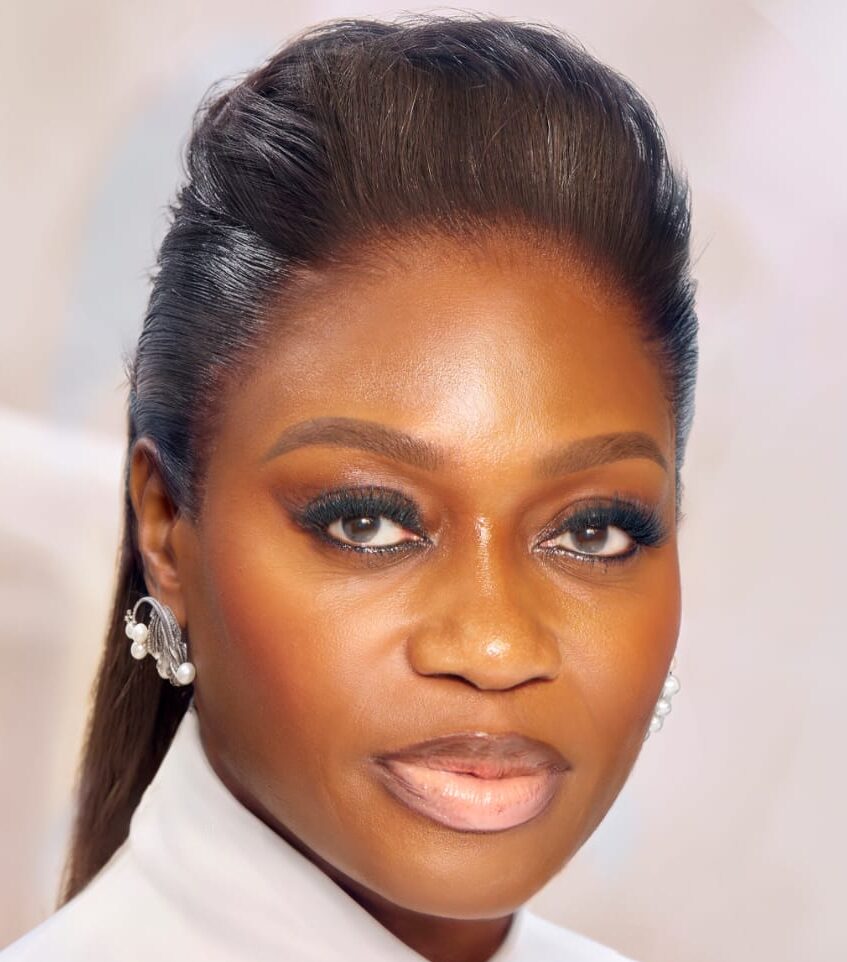
Barbra Okafor is a digital media strategist and storyteller whose decade-long career spans journalism, technology, and public policy across Africa, Europe, and North America. Her experience includes working with organisations such as BBC Media Action, the MacArthur Foundation, and TikTok. Barbra holds a postgraduate degree with distinction in Media and Communication from the London School of Economics and Political Science, as well as a specialisation in Ethical AI from Stanford University’s McCoy Family Center for Ethics in Society. She is the founder of Agency Lab and was named to Tech Economy’s Top 100 Women Shaping the Future in 2025. She regularly speaks on the future of African journalism, digital communications, and media innovation.
What habits or routines help you get ready for work?
First, I go to the gym. I’m an early riser, so I wake up quite early in the morning. I usually start my day around 5:45 a.m. It’s not because of the whole “you need to start your day early to be successful” idea. That’s not what it is for me. It’s simply a habit that helps ground me because I love working out.
I don’t like to start my day with work, I like to have two or three hours to myself before my 9-to-5 begins. Going to the gym in the morning gives me time to think clearly. In between lifting weights, I’m able to ground myself, organise my thoughts, and get ready for the rest of the day.
One thing that also helps, and this might sound a little strange, is the song I use as my alarm. I make sure my Alexa and all the devices that wake me up don’t use the generic alarm sounds or the really annoying iPhone ringtone. Instead, I wake up to music I love that gets me ready for the day.
After about four months, I usually get tired of the song and switch it to something else. But waking up to music I enjoy is a really good way to start my morning, and that’s what really helps me get ready for the day.
What does a typical workday look like for you?
My role sits at the intersection of communications, technology, and tech policy. I’m the Marketing and Growth Lead for a health tech company here in Berlin.
My responsibilities cover everything from paid search and AI search to ensuring we have the right content for both internal and external audiences. On the external side, that includes PR content, thought leadership articles for our C-suite executives, and responding to media enquiries about our products, all while ensuring we maintain the right brand positioning.
Internally, I’m constantly reviewing the content that needs to go out and making sure it aligns with how we’re positioning ourselves externally. I also work closely with our product, technology, and engineering teams to ensure everyone is aligned.
Because we’re a global team, I work across different markets, including the US and Europe. Whether it’s growing our brand presence through owned media or earned media, my role involves a lot of coordination, organisation, and strategic thinking.
I also structure my day quite intentionally. My mornings are when I tackle lighter tasks, things I’ve already set up that simply need monitoring to make sure everything is running smoothly. I also block out time in the morning for strategic thinking because that’s when I have my brightest ideas. I think by now you’ve realised I’m definitely a morning person.
By midday, after lunch, I move on to my priority tasks. These are usually things that require focus but are already familiar to me, like setting up campaigns for different markets, reviewing campaign performance, checking HubSpot to see how many prospects have come in, evaluating whether our messaging is working, reviewing quality scores, or deciding whether I need to adjust my paid search bidding strategy. I’ll also review content and handle other routine tasks that don’t require as much mental energy.
I try to schedule most of my meetings for the evenings, especially because I work closely with colleagues in the US. That time is usually spent aligning on deliverables
What tools or apps do you use most for your job, and why?
One tool I can’t live without is Trello. I absolutely love Trello because it helps me stay organised.
It’s a productivity tool that allows you to break your work into tasks and subtasks, making it much easier to keep track of everything you need to do. One of the things I like most about it is that, if you’re someone like me who also runs personal projects or another organisation, Trello gives you one central place to manage everything. I can see all my responsibilities at a glance, and that really helps me stay organised.
The second app I love is Notion. For me, it’s a one-stop shop for almost everything. Whether it’s writing, organising documents, uploading videos, collaborating with teams or managing projects, Notion has a place for it. You can also collaborate with external stakeholders, and it combines documents, spreadsheets, databases and so many other features in one platform.
For communications professionals, it’s particularly useful because you can build detailed sub-pages for things like content strategies, content calendars and communications plans. You can create strategy boards, mind maps, reminders and workflows in a way that feels almost automated, while still giving you complete control over how you organise your work.
If you’re someone who thinks visually, I’d also recommend Milanote. Depending on the version you choose, some features require a paid subscription, but both are fantastic tools. They’re essentially visual brainstorming boards where you can drag and drop images, videos, links and notes, sketch ideas, and map out concepts in a way that’s easy to understand. I use Milanote almost every day, it allows me to visualise what I want to communicate and organise my thoughts almost like a digital scrapbook.
Another tool that’s become part of my daily workflow is Slack. Beyond messaging, I really enjoy the AI integrations now available. You can integrate your inbox, organise your work more effectively, create prompts and keep everything in one place, which makes collaboration much smoother.
Finally, I have to mention Claude. I genuinely think it’s one of the most valuable AI tools available, especially for communications professionals. One thing I’ve realised is that many people don’t actually know how to use AI strategically. It’s not about putting everything into a chatbot and expecting it to do your job for you. It’s about using it to strengthen your thinking and improve your processes.
For example, if I need competitor research for a content strategy, Claude can conduct deep research across multiple competitors, analyse the content they’ve published over several weeks, and even generate recurring reports on a schedule. I also use it for calendar planning. I simply tell Claude everything I need to accomplish in a day, and it helps me time-block my schedule. Before Claude, I did all of that manually.
One of the features I value most is the ability to create projects and reusable skills. For instance, when I’m preparing a PR article with an external publication, I’ve already built a project containing all the context Claude needs, including our messaging guidelines, competitors, brainstorming notes, and the do’s and don’ts. Instead of writing a new prompt every time, I simply activate that project, provide the publication name or topic, and Claude generates work based on everything it already knows.
I also have another project dedicated to reviewing completed articles. It checks for potential PR risks, limitations and anything that should be flagged before publication. Traditionally, you’d review all of this manually, but Claude helps me consolidate my strategic thinking into one place and supports those checks.
That said, I always make one thing clear: communications professionals should never rely entirely on AI. Always do the final review yourself. That’s where your value lies. AI can automate repetitive tasks, but it can’t replace your judgement, intuition or strategic thinking. You have to challenge its outputs, ask questions, refine them, and teach it to think the way you do.
Those are the main tools I use every day. There are plenty of others, but these are the ones that have made the biggest difference to the way I work.
If you were not in Communications, what career path would you explore?
Honestly, I think I’d just spend my life eating and doing food reviews!
I love communications, and most of my passions revolve around it. I’m also a filmmaker, and a lot of the work I’ve done throughout my career has been connected to producing videos and documentaries.
But as I’ve gotten older, I’ve realised that the love of my life is food. And I don’t mean that in a gluttonous way. I genuinely love how food connects people. You can learn so much about someone based on the kinds of food they enjoy.
I also love the cultural aspect of it. I enjoy travelling, and whenever I visit a new place, I love discovering how people use some of the same spices I use, but in completely different ways. It’s beautiful to experience and learn from. I also love eating it, to be fair.
So, if I wasn’t in communications, I’d definitely do something around food. Maybe food and travel. I don’t know if I’d call myself a content creator, but I’d definitely document food. Maybe through documentaries… see, I’m coming back to communications again!
I’ve actually produced a couple of documentaries. One is available on Apple TV and the BBC. I also have one with the London School of Economics (LSE) on sex work and its implications in the Global North versus the Global South.
What is your favourite way to relax after work?
My favourite way to relax after work is watching K-dramas. I just want to watch a K-drama, eat in front of my TV, and talk to my sisters or my family. There’s something really comforting about spending time talking to the people you love, watching TV, and laughing together.
Sometimes, I just lie down, play some music in the background or put on a podcast, and simply switch off.
I also love reading. I’m currently growing my personal library, and although I don’t have all my books with me at the moment, I’ve kept every book I’ve bought over the last five years. I think I have about 50 books now, and I’ve read most of them. My sister and I have this little tradition where we try to read as many books as possible.
So, reading is one of the ways I unwind. Watching movies is another because I really love films, and spending time talking to my family is the third. Those three things help ground me after work, just as going to the gym helps ground me before I start my day.