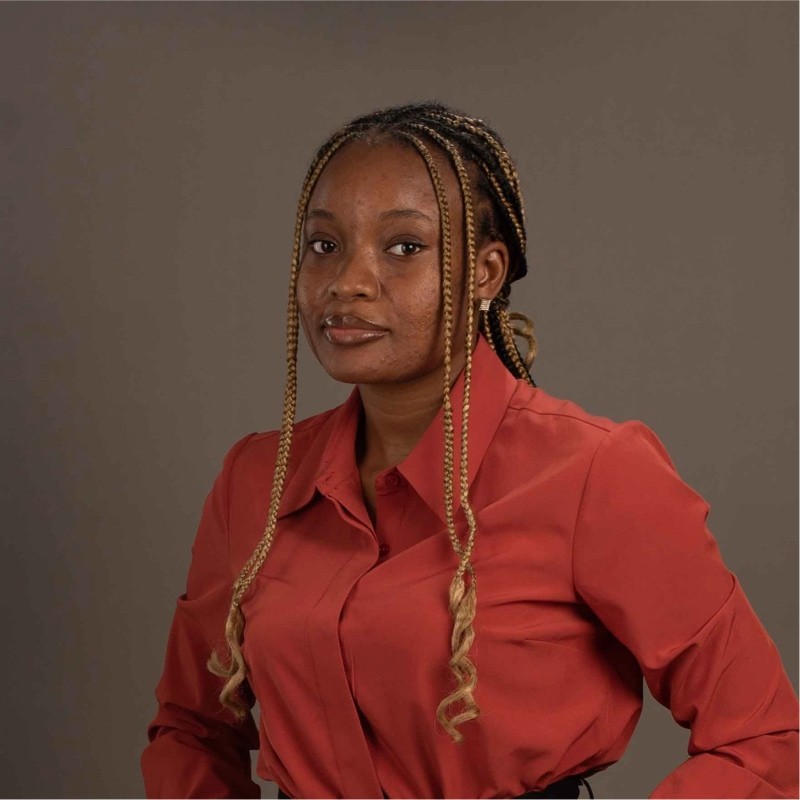

In this week’s Comms Spotlight, Opeyemi Ewumi reflects on a career driven by curiosity about how stories move online. From her experience working on staple series like Skinny Girl in Transit, she shares how building for an audience over time deepens your understanding of what resonates and why creativity must be supported by strategy.
How did you get your start in communications?
I actually got into communications by accident.
My early career wasn’t mapped out for media or marketing. I started out in roles that required structure and support, but I was always drawn to content. I worked as a content writer and social media curator, ran a blog, and became deeply interested in how brands used digital platforms to tell stories. Even then, I believed social media wasn’t just for posting. It was a strategic storytelling tool.
When I joined NdaniTV in 2015, that instinct found direction. Being in a digital-first film environment made me curious about distribution in a more intentional way. How do you leverage social media to promote a film properly? How do you package moments so they travel? How do you turn clips into conversations?
I taught myself how to edit video snippets for digital platforms and began experimenting with how different formats performed. I paid attention to audience behaviour, what made people click, what made them stay, and what made them share. Over time, that curiosity evolved into discipline.
I began to understand communications not just as messaging, but as strategy: clarity, timing, audience insight, and intentional distribution. That’s where I found my lane, at the intersection of storytelling and performance.
What does a typical day look like for you at NdaniTV as a Digital Marketing Manager and Producer?
No two days are the same, but most days sit at the intersection of numbers and narrative.
I review performance metrics such as watch time, retention, click-through rates, and subscriber growth, asking what they are really telling us. I also align campaign direction with production timelines and refine thumbnails, titles, and social media strategy.
Because I also produce and market some content, I can’t afford to think in silos. I’m constantly asking:
- Is this emotionally compelling?
- Where should this sit, TikTok or YouTube?
- Will it hold the audience’s attention?
- Will it convert?
My job is to make sure creativity doesn’t float. It lands.
What has managing digital campaigns taught you about responsibility and results?
It has taught me that results are rarely accidental.
Digital strips away comfort. If something underperforms, you can’t simply let it go. You take a deeper look at it. Packaging, targeting, timing, audience fatigue, messaging clarity, everything is measurable.
I’ve learned that:
- Views alone mean very little.
- Retention means respect.
- Consistency is key.
Managing campaigns has made me more accountable and more precise. You don’t just hope content works. You build the conditions for it to.
In such a fast-moving digital space, how do you decide which ideas or trends are worth pursuing?
Trends are great, however, I prefer to approach them with the following questions in mind:
First: Does it align with our voice?
Second: Does it serve our audience?
Third: Does it build long-term affinity?
If it doesn’t strengthen community, watch time, or brand positioning, it’s probably a distraction.
Speed is important, but alignment is everything.
What is one project or moment that strengthened your confidence as a communications professional?
It has to be working on the marketing of Skinny Girl in Transit from inception. Being part of that journey, from early digital traction to sustained audience growth over multiple seasons, shaped me. I’ve seen what happens when strategy is consistent. I’ve seen how community grows over time. I’ve helped position, protect, and evolve that brand.
When you grow with a project like that, your confidence isn’t loud, it’s rooted. You understand audience behaviour because you’ve studied it. You understand longevity because you’ve built it.
What’s something about your job that gives you a deep sense of purpose?
I care about how our stories are seen. We’re operating in a crowded digital ecosystem, and visibility and instant success aren’t guaranteed. Being part of the process that ensures our stories don’t just exist but compete matters to me. Yes, I focus on performance. Yes, I’m analytical. But underneath all of that is a simple belief: our stories deserve scale.
Helping them reach the right audiences, in the right way, at the right time, that’s what makes it all worth it.