
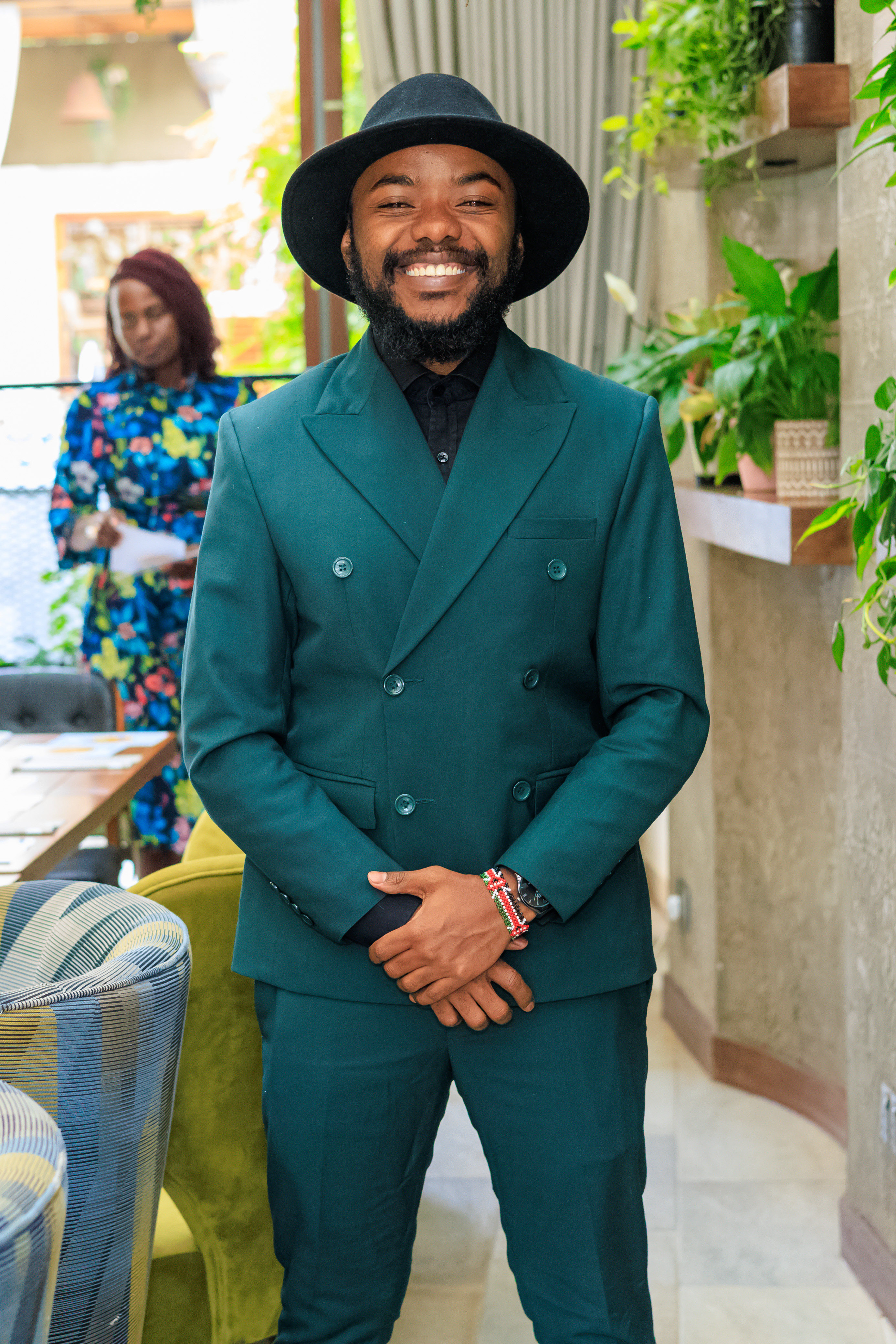
David Jerome Kiarie is a Founder, Digital Communications specialist, and Lead/New Media Consultant, CyKE Africa. In this interview, he discusses building a sustainable digital presence, emerging trends in the industry, the tools he relies on and the skills young professionals need to thrive in digital communications.
What inspired you to pursue a career in Communications?
It started at home, with books and films. Our parents made sure books were always within our reach, and we watched lots of movies with my brothers, often on Sunday afternoons or during KTN’s Saturday Box Office. Back then, we would also sneak off to the neighbourhood sit-and-watch cinemas where children gathered in the evenings to watch approved movies by Kenya Film Corporation. For us, that was such a big deal.
What I enjoyed most was picturing what I was reading or watching in my head. I would imagine how a story would look on TV or in a movie, and I would often wonder who decides how it looks and sounds, how they ideate the stories, and craft the ‘words’. Cartoons and animations fascinated me even more. It amazed me that people sat down, designed those characters, and even had the ability to give them voices.
That curiosity became a love for media. I wanted to be a journalist or a filmmaker (and I still hope to make a film one day), so I enrolled in communications school. That decision led me, step by step, to the career I have today.
What does a typical day look like for you as a Digital Communications and New Media Consultant at CyKE Africa?
No two days are exactly alike, but most start the same way: a morning meeting with the social team. We look at content performance and spot opportunities for the week ahead.
After that, I sit down with our Business Development consultant to go through partner priorities for the day or week and pick out any requests or opportunities we can act on. I then catch up with the visual and events team on what’s in progress. The rest of the morning goes to reviewing proposals, campaign plans, content calendars, scripts, and captions.
Afternoons are usually for fieldwork or partners. That might mean a shoot, event planning, reviewing edits, or updating a partner on progress.
I wrap up by planning what comes next and sending out any reports that are due. Then I switch off by playing a bit of football with friends.
How do you help clients build a sustainable digital presence rather than chasing short-term trends?
I start with two questions: what does the partner want to achieve, and who do they want to reach? Once those are clear, the content has a purpose. A trend is only worth joining if it fits the brand and the audience. If it doesn’t, we skip it and suggest other ideas within reach.
From there, our team of creative consultants helps partners set up a few clear content themes and pillars, a steady posting schedule, and a realistic way to measure performance indicators. I also push them to build what they own, like a website, an email list, and a community, because platforms can change the rules overnight.
Then we review the numbers every two weeks or monthly and adjust. In my experience, slow and consistent beats going viral once and disappearing.
What digital communication trends do you think communicators should be paying closer attention to?
Short video is the biggest one. People now find and trust information through Reels, TikTok, and Shorts, so communicators need to learn to tell a story in 30 to 60 seconds.
I would also say AI. It is changing how we research, write, and design, and we need to learn to use it well without losing the human voice, personality, and judgment.
Third, real voices and communities. People trust real people, the work they do, and the impact they leave after projects and campaigns – more than polished brand posts. This builds trust, and with so much misinformation online nowadays, communicators who are honest and careful with facts will always stand out.

What tools or platforms do you use most in your work?
For planning and tracking, I use Asana and Trello. For analytics, I use Google Analytics, Semrush, and Sprout Social. For design and video, I use Canva, Premiere Pro, and CapCut. For publishing, I use WordPress and the social platforms, mostly LinkedIn, Instagram, and TikTok.
I also use AI tools like Claude, Gemini, and ChatGPT for different tasks and for first drafts and ideas, and then I edit everything myself. The tool matters less than knowing what you want to achieve with it.
What advice would you give to young professionals looking to build careers in digital communications?
- Learn to write well. Everything else can be taught, but clear writing will carry you far. I learnt this in my second year at the University when I was selected to tutor students to write their thesis papers in an Advanced Writing class.
- Build a portfolio early. Most of what you do today will always be reflected in the coming days; a digital trail of your work will always position you at the front. Volunteer, help a small business, or run your own page, and keep a record of the results.
- Learn the basics of analytics, video, and design. You don’t have to be an expert in everything, but you should understand how it all works together. Allow yourself to be coached by other experts through their work and ask questions when you find someone doing something extraordinary.
- Be curious and keep learning, because the industry keeps changing. Always be careful with facts and with people’s stories. Your reputation is built on being honest, trustworthy, and reliable.
- And talk to people. Ask questions, attend events, join WhatsApp groups where these conversations about communications and brand take place, and do follow-ups with people within the industry. A lot of opportunities come from people who know who you are and have seen how you work.