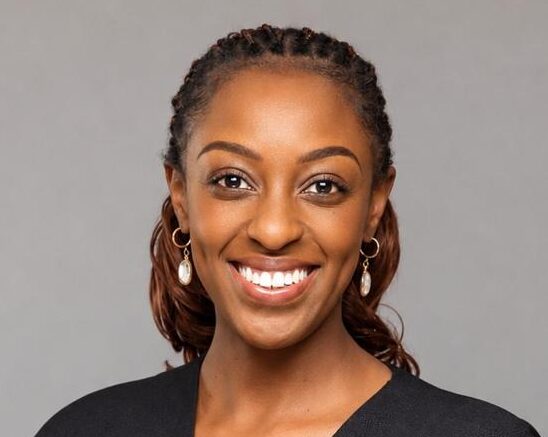
Siki Kigongo is a communications professional with 14 years of experience spanning humanitarian response, health, research and food systems. She currently leads Programmatic Communications at AGRA, where she heads communications across 12 countries in East, Southern and West Africa. In this interview, she draws on her experience to share insights on impactful communications, with some focus on Africa’s agrifood systems and development initiatives.
What inspired you to pursue a career in Communications?
It started with a love for storytelling and a curiosity about people. Growing up, I was always drawn to current affairs and the media, and to how stories could shape what people believed.
I began my career as a freelance journalist with New Vision in Uganda while studying International Media and Communications at the University of Nottingham. Journalism taught me to ask questions, look beyond the obvious and, most importantly, listen. In 2012, I wrote about Uganda’s response to the Ebola outbreak in Kibaale. In earlier outbreaks, fear and misinformation had spread almost as fast as the virus. This time, the Ministry of Health was printing factsheets in newspapers, and leaders were speaking to the public within a day. I saw how timely, credible information could counter fear. That’s when I understood that communication isn’t something you add once the real work is done. Sometimes it is the real work.
A couple of years later, during my Master’s at LSE, I sat in a packed room as Binyavanga Wainaina, in a bright yellow suit and blue mohawk, read an unpublished chapter of his memoir about coming out. It was 2014, and Uganda and Nigeria had recently passed anti-homosexuality laws. For months, the debate had been about politics, legislation, and the West. In under an hour, one man’s story put a human face on it all. The room moved between laughter and grief, and he reminded us there were multiple ways of being African. I wrote about that evening for the LSE Africa blog, and it has stayed with me ever since, because it showed me how a single story can widen what people believe is possible.
Those two moments pulled me towards development communications. The sectors I’ve worked in have changed, from humanitarian response and health to research and food systems, but what drives me has stayed the same. For far too long, Africans have taken a back seat in rooms where decisions about our continent are made. I want us at that table. I may not always be the one in the chair, but I can shape the narrative for those who are, so that when African leaders speak, they do so with conviction, evidence, and in our own voice. For me, that’s what it means to make sure Africa tells its own story.
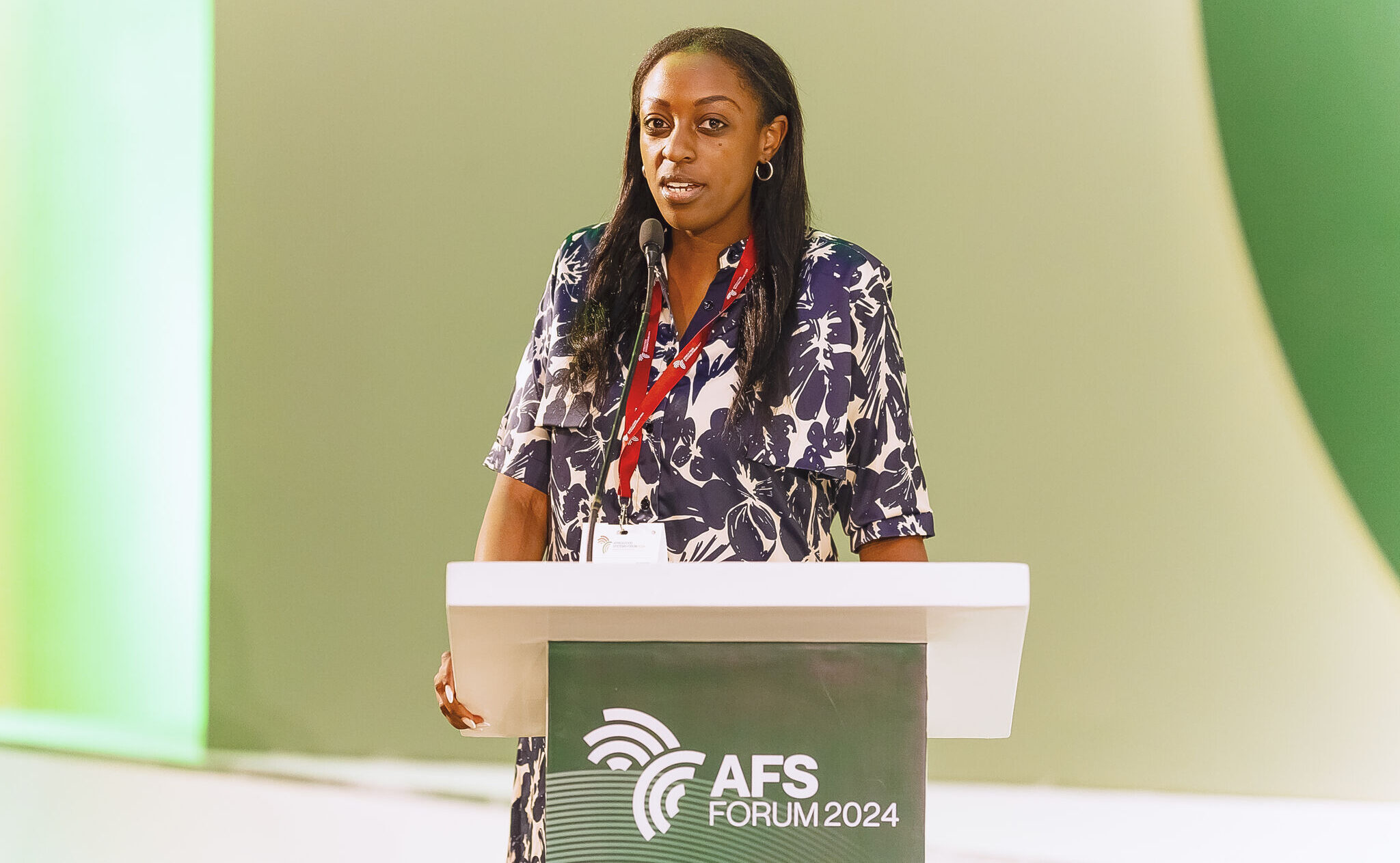
What does a typical day look like for you as Lead, Programmatic Communications at AGRA?
I’m not sure there’s such a thing as a typical day in my role!
I lead communications for AGRA’s programmes across 12 countries in East, Southern, and West Africa, working with a network of country communications associates and agency partners. I also oversee communications for YEFFA, one of AGRA’s flagship initiatives focused on creating opportunities for young people across Africa’s agrifood systems. I do a fair amount of writing with leaders and technical experts across the institution, too. Often that means taking some of the longest, most technical reports and finding a way to turn them into something people might actually want to read.
On any given day, I could be reviewing a country communications plan, working with an agency on a campaign launch, editing an opinion piece, drafting remarks for a senior colleague or helping a country team navigate a sensitive issue. Sometimes I’m thinking about how we position an entire programme; other times I’m obsessing over a single sentence because it doesn’t quite say what we mean.
A lot of the job involves coordinating people across different countries, each with their own priorities and contexts. I’ve learned that good communications leadership is as much about judgment and relationships as it is about the technical work. You’re constantly bringing perspectives together, asking difficult questions, making editorial calls and sometimes pushing back when something isn’t ready to be communicated.
Not every story needs to be told immediately, and not everything needs a press release!
I also make a point of protecting time for my team. I’ve had the privilege of recruiting and supporting our country communications associates, and watching them grow into confident professionals who can hold their own and advise colleagues in their markets has been one of the most rewarding parts of the job.
And, of course, there’s always a deadline somewhere!
How do you translate complex programmes and development work into stories that resonate with different audiences and impact farmers’ livelihoods?
Let me be honest: not everything we work on is naturally captivating. Nobody has ever stayed up past midnight unable to put down a report on soil health, and a new trade policy rarely comes up over dinner. But behind those documents are changes that can have very real consequences for people’s lives. Healthier soil might mean a better harvest for a farmer, while a change in trade policy could mean a trader spends less time at a border and takes home more money. If I can make those changes visible and help people understand why they matter, that’s a win.
So I start with the farmer, not the programme. Development organisations are very good at talking about interventions, frameworks, and indicators, but that language doesn’t mean much to someone outside the organisation. I often ask colleagues simple questions: What was the problem? What changed? Who experienced that change? What evidence do we have? And why should anyone care?
Then I think about who’s listening, because the same story won’t necessarily work for everyone.
Last year, I wrote a column for Business Daily about malnutrition in Kenya. To a nutritionist, that’s a health story. But Business Daily’s readers include business leaders and policymakers, so I led with the economics: hidden hunger costs Kenya an estimated Sh374 billion a year in lost productivity and healthcare, more than the national roads budget. Suddenly, a biofortified bean variety stops being a niche agricultural story and becomes part of an investment argument.
A farmer, meanwhile, needs something entirely different. She wants to know where she can get the seed, whether it will grow well on her farm, and what it might mean for her family’s health and income. That’s why radio remains one of our most valuable tools. It reaches farmers in their own languages, allows them to ask questions, and gives them information they can actually use.
And we have to be truthful about what the evidence shows. Not every intervention transforms a life overnight, and we shouldn’t pretend otherwise. Sometimes acknowledging the challenges alongside the progress makes a story far more credible.
Can you share a programme or communications initiative that you are particularly proud to have worked on?
Right now, it’s the work we’re doing on YEFFA, our partnership with the Mastercard Foundation to create dignified work and entrepreneurship opportunities for young Africans in agrifood systems. And it feels personal. Not so long ago, I was one of the young people this programme is for. I’ve officially crossed over now, though I’m holding on to my youthfulness by a thread!
Around 20 million young Africans enter the labour market every year, but only about 3 million formal jobs are created. Agrifood systems have enormous potential to create livelihoods, but we need to face up to why so many young people remain hesitant.
One of the things I’ve pushed for is a change in how we communicate these opportunities. For years, we’ve told young Africans that agriculture is the future, but what does that really mean to someone who can’t access land, finance, or markets? And why do we still talk about agricultural employment as though every job involves standing in a field? There are opportunities in processing, logistics, technology, marketing and so much more. We need to challenge those perceptions, but we also need to make the opportunities tangible.
That’s the challenge behind our new campaign, ‘Grow Your Tomorrow, Today’. We’re speaking to two very different audiences, and they don’t always pull in the same direction. On one hand, we want young people to see agrifood systems differently, recognise opportunities they may never have considered and know where to begin. On the other, we’re speaking to policymakers and decision-makers, because not every policy works for young people, and enthusiasm alone won’t overcome barriers to finance, land or markets. The same campaign has to inspire a 22-year-old in Tamale and persuade a decision-maker in Accra. Getting that balance right has been one of the most interesting challenges of my career.
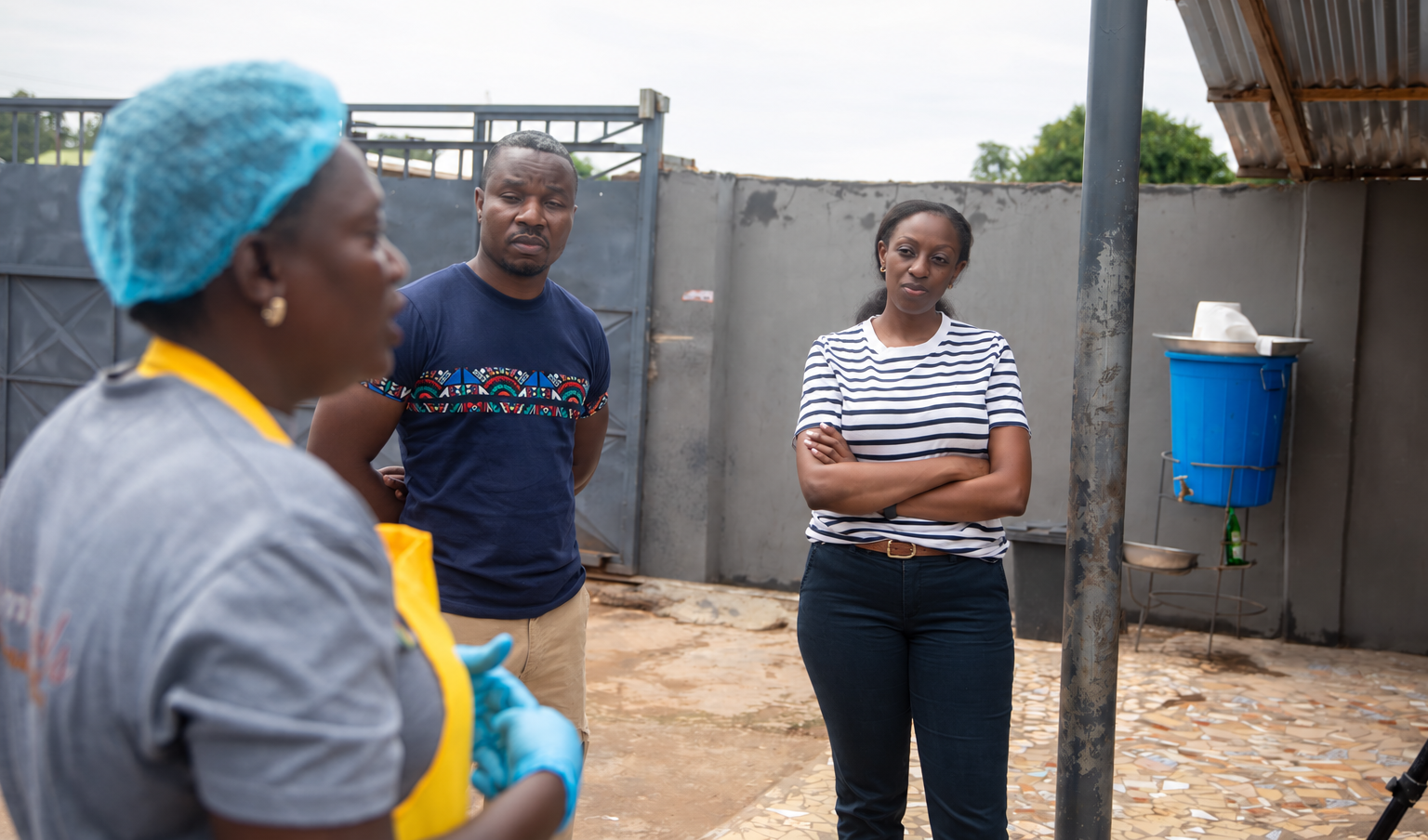
And behind all of this are real people. In Mozambique, I met Laura Cardoso, who grew from a village-based agent into an agricultural entrepreneur, training around 500 farmers and moving about 30 tonnes of produce to market. In Northern Ghana, I met Ayishetu Adam, a young woman with albinism who had repeatedly been turned away from jobs despite having a diploma. Today, she runs her own soybean products business and earns her own income.
That’s what I’m proudest of. We’re not just trying to change how young people see agriculture. We’re trying to change what’s possible for them, and communications has a role to play on both sides.
In your experience, what can communications and programme teams align better on to ensure more impactful programme delivery?
I think we need to stop inviting communications teams into the room once all the important decisions have already been made. Too often, we’re brought in when an event is approaching, a report is ready or someone needs a success story. By then, we’ve missed the chance to influence how a programme engages its audiences, communicates opportunities or captures evidence of change.
I’d love to see programme and communications teams start by agreeing on three things: what we’re trying to achieve, who needs to know or do something differently, and how we’ll measure whether communications contributed to that change. Reach alone doesn’t equal impact. We can reach millions of people with a message, but what happens afterwards? Did they learn something useful? Did they seek out an opportunity? Did a decision-maker act on the evidence? Those are the questions we should be asking.
It also takes trust. Some of the best stories I’ve worked on came from programme colleagues who called us the moment something interesting happened in the field. That kind of relationship doesn’t happen overnight. You build it by showing up, listening, and treating programme teams as partners rather than simply people who supply content.
And alignment has to extend beyond storytelling. Communications can help build public understanding, bring evidence into policy discussions and connect people to opportunities. But that only works when communicators understand the programme’s priorities and programme teams recognise what communications can realistically contribute.
If we genuinely believe communications contributes to programme outcomes, then it needs to be reflected in planning, budgets and measurement from the beginning. We can’t keep treating it as an afterthought and then expect it to deliver results.
What advice would you give to young professionals interested in building careers in development communications?
I’d start with writing. Learn to write well, and write often. Whether it’s a social media post, a speech, a strategy or a difficult email, the ability to communicate clearly will serve you throughout your career.
I wrote my first opinion pieces as a student and have kept writing ever since, for publications including Devex, SciDev.Net, and Business Daily. Some of my most valuable pieces were co-written with senior leaders and researchers. Learning to shape an argument alongside people with decades of expertise, while keeping it clear and human, taught me a great deal. Don’t be intimidated by people who know more than you. Ask questions, listen, but remember you have something to contribute too.
I’d also encourage young communicators to learn the substance of whatever sector they work in. You don’t need to be an agricultural economist to work in food systems communications, but you should understand the issues and be curious enough to keep asking questions. The more you understand the work, the more value you bring.
Something I wish I’d appreciated earlier is how important it is to understand how organisations actually work. Learn how decisions are made, how budgets are built and what keeps leaders awake at night. As you grow, your value comes increasingly from your judgment, not just your ability to produce good content.
And don’t worry if your career doesn’t follow a straight line. I started as a journalist and have since worked with organisations including BRAC Uganda, UNAIDS, APHRC and the Africa Investment Forum, across humanitarian response, health, research, advocacy and food systems. Some of my biggest lessons came from assignments I wasn’t entirely sure I was ready for. None of those experiences was wasted.
Finally, be dependable. Follow through, meet deadlines, take feedback well and make life easier for the people you work with. Talent opens doors, but trust is what keeps them open.
You won’t always be the most senior person in the room, but that doesn’t mean you can’t influence what happens in it. Sometimes all it takes is asking a question nobody else has asked or bringing forward a perspective that’s been overlooked. That’s where some of the most meaningful work in communications begins.