

This week’s Comms Spotlight shines on Agenga Wanjiku Hellen, a communications leader whose career has evolved from the newsroom to corporate affairs. She reflects on her journey through media, agency life, and how these experiences now inform her work in institutional leadership within corporate affairs.
How did you start your journey in Communications?
My journey into Communications started long before I knew what a byline was. As a child, I was glued to the television watching the late Kasavuli on Kenya Broadcasting Corporation (KBC). After every bulletin, I’d stand in front of a mirror and deliver my own “news”, no audience, just passion and big dreams.
After high school, I followed that spark to Tangaza University College, a constituent college of the Catholic University of Eastern Africa, where I pursued a degree in Social Communication, majoring in Broadcast Journalism. That’s where curiosity met craft.
My first real taste of the newsroom came at the Kenya Television Network (KTN) as an intern, and like most interns, I ran. A lot. Between studios, production rooms, and endless errands. But while I ran, I watched, listened, and learned from some of the best in the industry.
That curiosity paid off when I landed my first reporting role at Royal Media Services as a Swahili reporter. This is where I truly found my niche.
For four years, I told human-interest stories of communities, everyday struggles, and quiet resilience, with a strong focus on children and women. That work earned me several accolades, including children and media rights awards from the Annual Journalism Excellence Awards (AJEA), as well as local and international media fellowships.
My career then took me across different media houses and eventually into the world of strategic communications and Public Relations.
I joined Express DDB Advertising, an affiliate of BBDO, a global advertising agency network, as a Public Relations Director. There, I sharpened my corporate communications skills and led PR efforts for major brand launches in Kenya, including Carrefour, DKT brands, and Tala, the digital lending app.
Working in an agency environment gave me rare exposure across the public, private, and NGO sectors, deepening my understanding of how communication shapes perception, policy, and people’s lives.
Today, I bring that full experience to my role as an Assistant Director at the University of Nairobi, where storytelling, strategy, and impact continue to intersect just as they did when I first spoke into a mirror, dreaming of being heard.

What does a typical day look like for you as an Assistant Director at the University of Nairobi?
There’s no such thing as a “typical” day, but that’s exactly what makes the role exciting.
In a nutshell, my day sits at the intersection of supporting 11 faculties, strengthening internal communication, and elevating the visibility of East Africa’s premier university. All while safeguarding the reputation of a great institution.
My work is largely strategic. I spend a lot of time on social listening, tracking conversations and sentiment, and anticipating issues before they become headlines. We run numerous events, so I’m often preparing management for public engagements, developing media packs, coordinating media liaison, and ensuring our messaging is clear, consistent, and confident.
A big part of my role is internal communication and stakeholder engagement. Working closely with communication teams across faculties, offering support where needed, and ensuring everyone is speaking in harmony, not noise. I also engage with government stakeholders, partners, and the media to keep relationships strong and productive.
On any given day, I could be moving from a strategy meeting to a crisis-prevention conversation, then straight into an event briefing or a faculty support call. It’s a mix of planning, listening, advising, and executing, and no two days ever look the same.
In short, it’s a role that keeps me on my toes, thinking ahead, and constantly reminded of the power of communication when it’s done right.
What’s something about your role that most people would not expect?
Most people assume my role is all strategy meetings, polished statements, and high-level decision-making. While that’s part of it, a surprising amount of the job is very hands-on.
Some days, I’m just as likely to be handling mundane logistical details as I am shaping strategy: checking event setups, fixing last-minute gaps, coordinating who sits where, or making sure the microphone actually works before the Vice-Chancellor walks in. Communication doesn’t fail in theory, it fails in the details.
Those behind-the-scenes moments rarely make headlines, but they’re often what determine whether everything else succeeds. I have learned that good communication leadership isn’t about staying above the work; it’s about being willing to roll up your sleeves and make sure the basics are right.
So yes, the role involves big-picture thinking, but it also involves small, unglamorous tasks that quietly hold everything together. And honestly, that’s where the real impact often lives.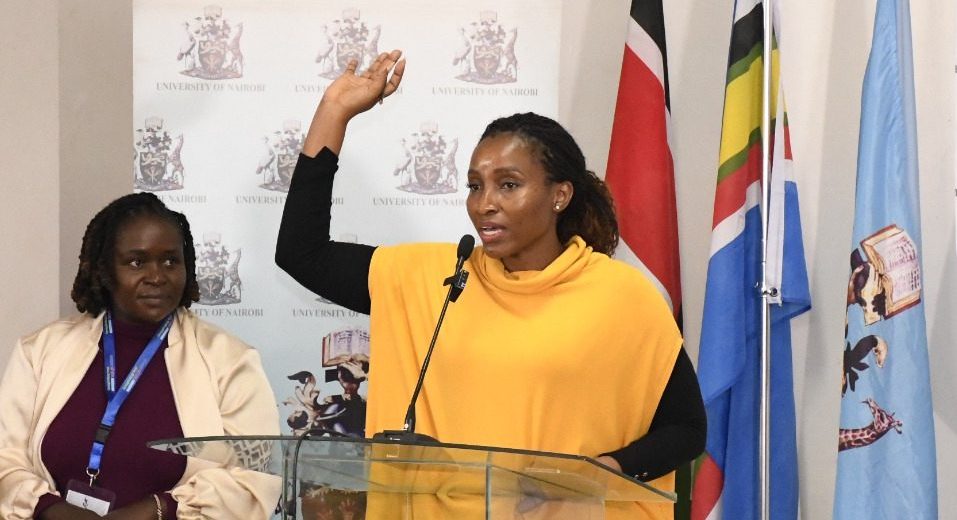
What led you to specialise in corporate affairs, and why did it feel like the right fit for you?
Honestly, it wasn’t planned. It found me, and when it did, it felt right. Working in an agency environment exposed me to many sides of communication, such as brand management, digital strategy, public relations, and storytelling at scale. But corporate affairs stood out because it brought everything together. It wasn’t just about visibility; it was about reputation, relationships, strategy, and impact all at once.
Corporate affairs sits at the intersection of communication, leadership, policy, and public trust, and that balance spoke to me. It draws on my newsroom instincts, my PR experience, and my ability to think both strategically and practically. It requires clarity, calm, and credibility, especially when the stakes are high.
As I grew in the space and later served in institutional leadership, including at the University of Nairobi, I realised this was where my skills and values aligned best. Corporate affairs allows me to shape narratives responsibly, manage complex stakeholders, and support organisations in showing up with integrity.
Looking back, it makes sense. Every step of my journey was preparing me for this work. It didn’t feel like a pivot, it felt like coming home.
Looking back, is there anything you would do differently in your career?
Yes, if I could adjust anything, it would be investing earlier and more intentionally in structured personal and professional development.
Over the last two years, I have undertaken several professional communication courses that have sharpened my skills and expanded how I think about strategy, leadership, and impact. In hindsight, those tools would have added immense value earlier in my 15-year journey.
That said, I don’t live with regrets. Every stage of my career taught me something essential, especially learning on the job, in fast-paced newsrooms and demanding communication environments. Those experiences built resilience, instinct, and adaptability, which no classroom can fully teach.
What I take forward is balance, combining lived experience with continuous learning. Today, I am more intentional about growth, staying curious, and evolving with the profession. If anything, that reflection has made me a better communicator and a stronger leader.

What is your top advice for young professionals interested in corporate communications?
Passion will get you there, but discipline and curiosity will keep you there.
From my experience, genuinely enjoying what you do makes all the difference. Corporate communications can be demanding, fast-paced, and at times unforgiving. If you’re not passionate about storytelling, people, and problem-solving, it shows. When you are, that passion carries you through long days and high-pressure moments.
Start by learning broadly. Understand media, digital communication, branding, stakeholder engagement, and reputation management. Don’t rush to specialise too early. Be willing to start small, ask questions, observe quietly, and learn constantly. Every task, no matter how minor it seems, is building a skill you’ll rely on later.
Most importantly, protect your credibility. Say what you mean, do what you promise, and understand the weight words carry, especially in corporate spaces. Communication is influence, and influence comes with responsibility.
If you stay curious, grounded, and committed to doing the work well, the career will grow with you.